
Journey Mapping: Opioid Agonist Treatment
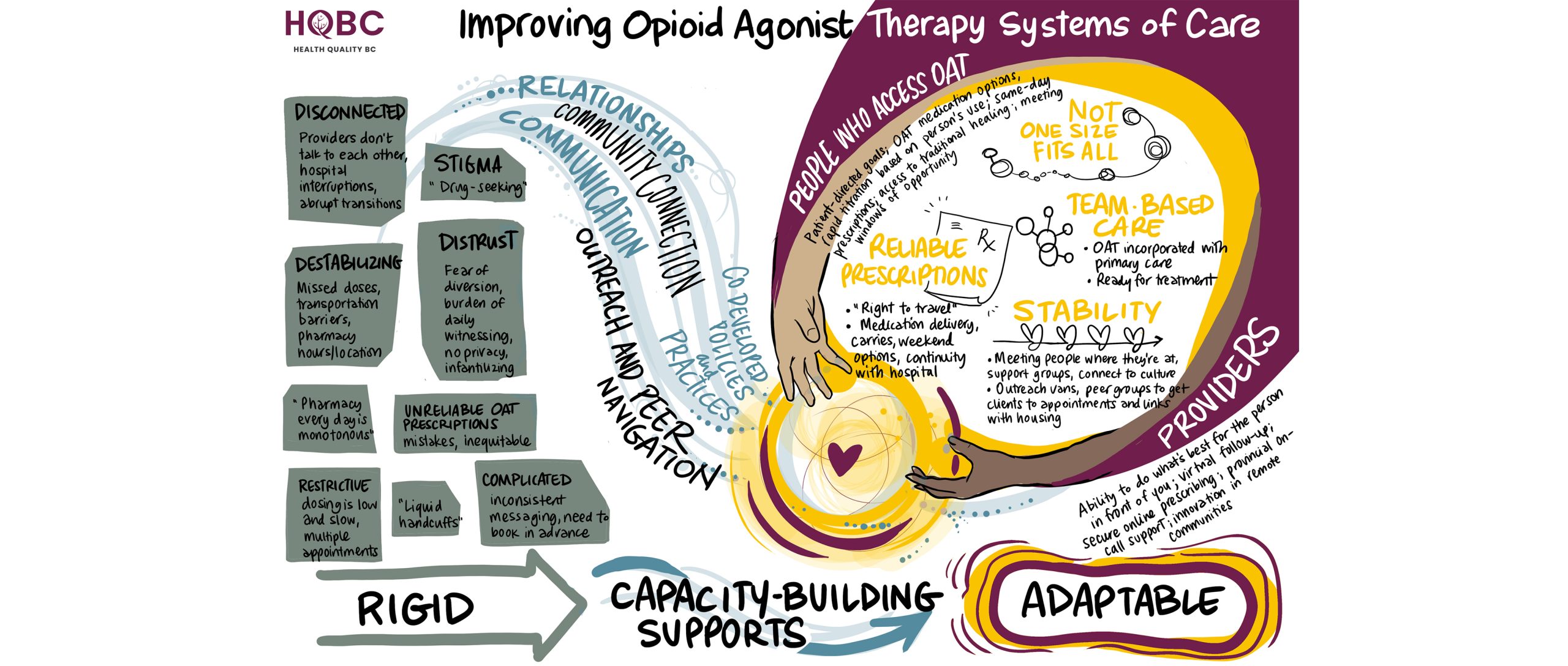

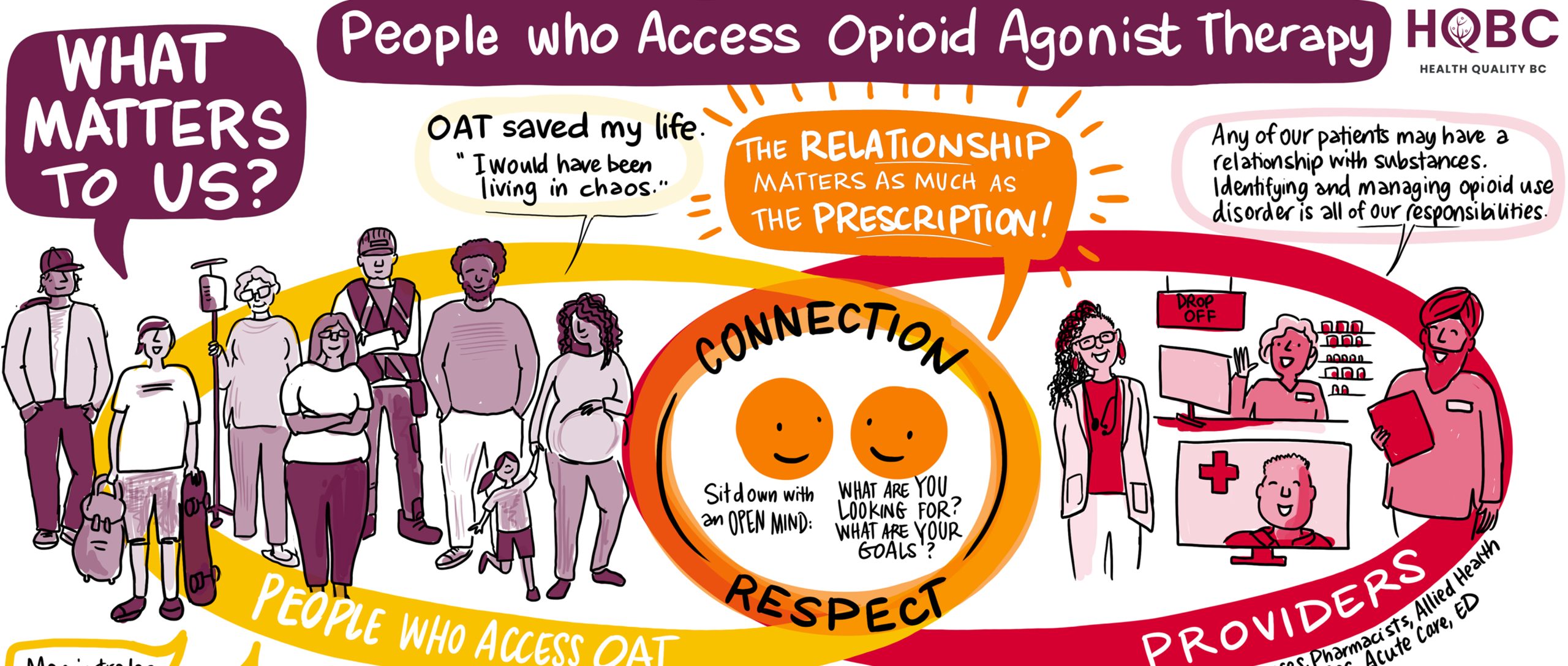

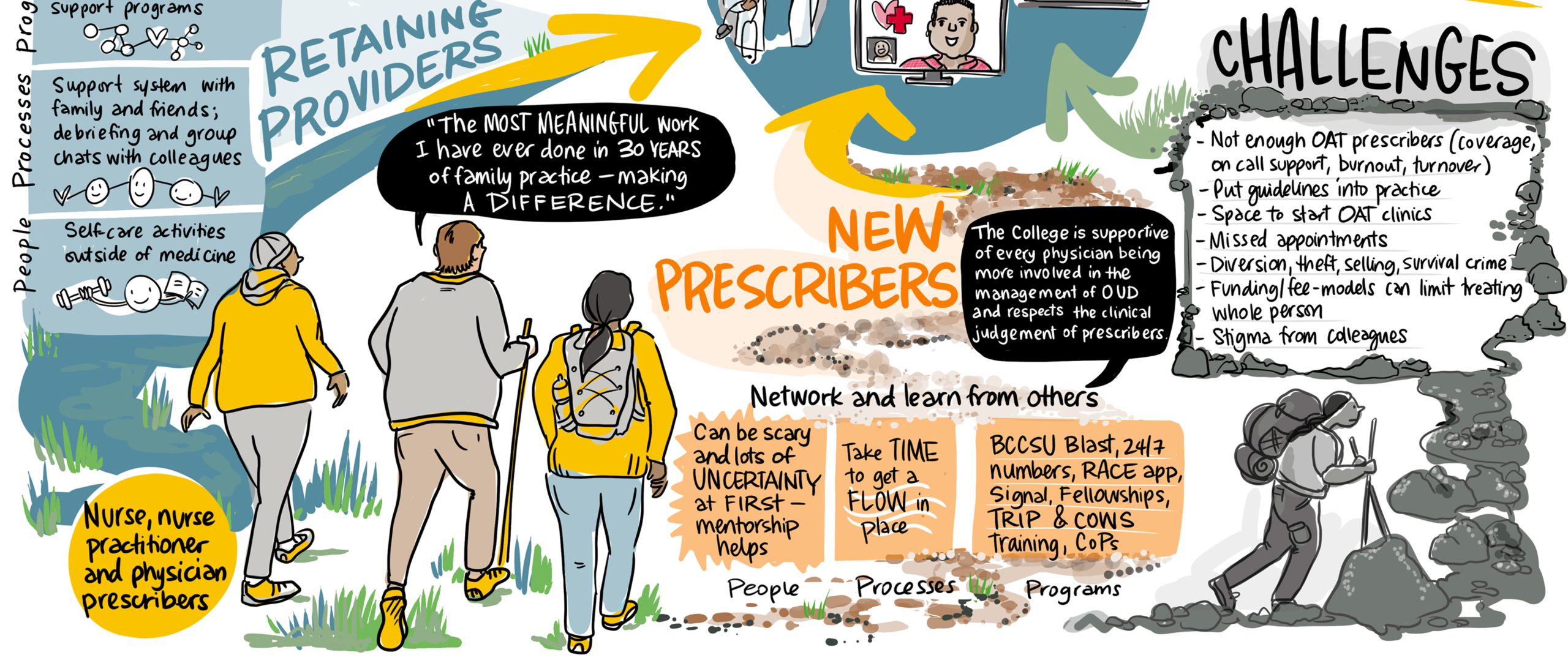

Visualizing how the system is experienced by health care providers and people with lived/living experience
Towards shared understanding about Opioid Agonist Therapy in primary health care, by visualizing different perspectives with online graphic facilitation
Improving Health Care for People who Use Substances
I wish it wasn’t true, but almost everyone knows someone affected by the toxic drug poisoning crisis and this public health emergency. We need effective collaborations and system responses improve the health care of people who use substances. In 2023, to create more shared understanding of the issues, Health Quality BC convened people with lived/living experience and primary health care providers for important dialogues.
A Shared Understanding: We Need to Visualize Multiple Perspectives
I visualized a series of projects with HQBC focussed on Opioid Agonist Therapy and primary health care, using journey mapping methodologies. Journey mapping is a drawing methodology that visualizes the multiple steps of a health care experience – and is an excellent way to centre the lived and living expertise of different voices. This set of visuals can be read alongside the new report from HQBC, and builds on the previous journey mapping / system mapping work from 2017. Part of this work was drawn live in real time during online meetings, and part of this work was created by illustrating and refining a series of diagrams taking different perspectives.
Online Graphic Facilitation and Journey Mapping
In the words of HQBC, the online journey mapping session “…helped inform the Learning About Opioid Use Disorder in Primary Care (LOUD in PC) Collaborative, an improvement initiative launched in 2023 that aims to improve the care of people who use substances by increasing accessibility to OAT across BC. The virtual session was attended by over 50 people, including PWLLE, care providers and organizational representatives from across BC’s health care system. These sessions aim to inform future collective actions that address challenges, improve systems of care and reduce the impacts of the illicit drug toxicity epidemic in BC.”
Read the report and see the full visuals here.
“I appreciated how Sam and Drawing Change brought both artistic skill and strategic thinking to the table, making us feel heard, understood and inspired throughout the process. My project needed a way to visually communicate deeply personal and complex concepts with clarity and impact, and Sam helped me think through not just how it looked, but how it could truly connect with people.”
Chelsea Hochfilzer, Director, Health System Improvement, Health Quality BC