
Inclusive Housing Illustrations
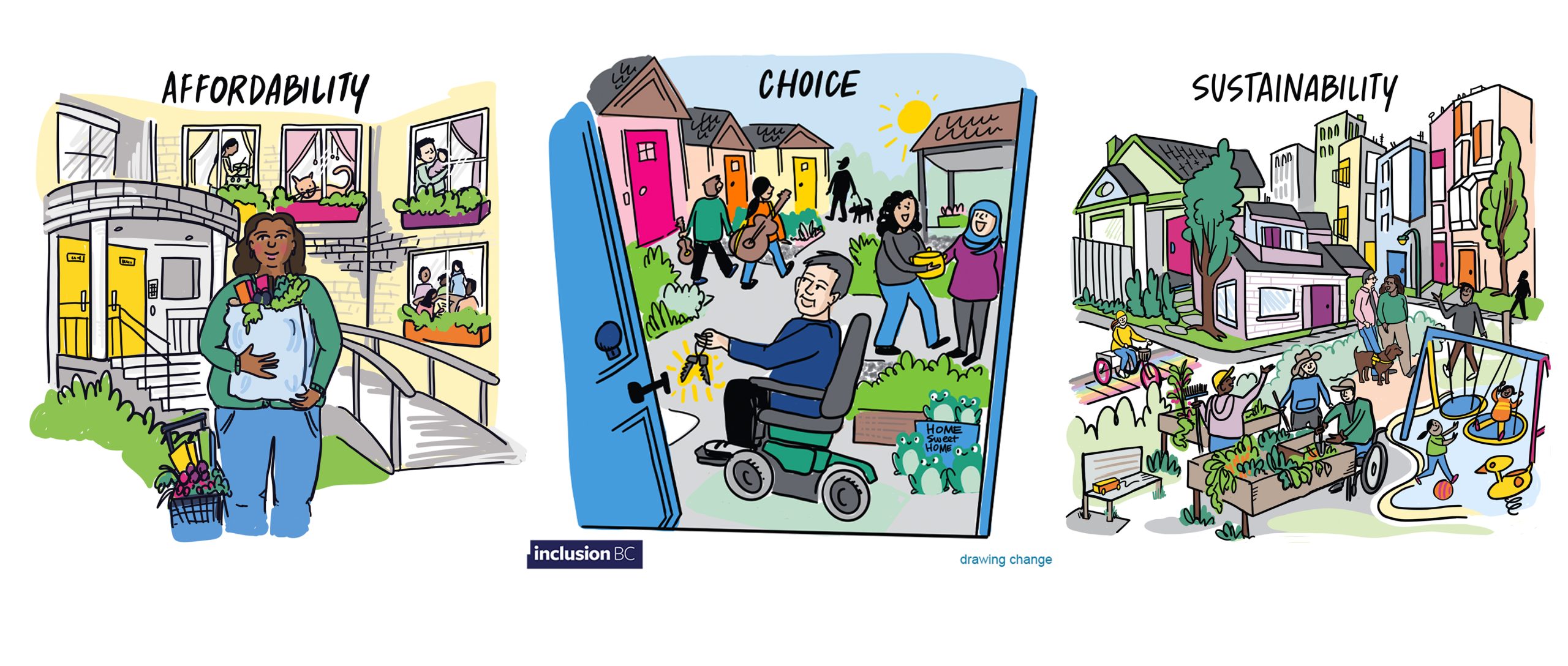


Inclusion BC: Inclusive housing is about creating housing for everyone
People with intellectual and developmental disabilities want a safe and decent home of their own. These new illustrated fact sheets, developed by Inclusion BC and SPARC BC and illustrated by Drawing Change, help explain Inclusive Housing.
“My housing dream means having my own keys”
When I began drawing this project with Inclusion BC, one of the first things people with intellectual and developmental disabilities told me that their dream housing meant having their own keys. I heard that having these keys was a symbol of inclusion – because it would mean that it was a home. But their dream of secure, affordable housing, located in a neighbourhood where it’s easy to get around and with choices and supports for their needs – also felt out of reach.
Listening and understanding the needs: Inclusive Housing
Adults with intellectual and developmental disabilities are more likely to live in poverty and face homelessness, and more than 5,000 people with intellectual and developmental disabilities are looking for housing in British Columbia. The demand for inclusive housing isn’t keeping up with what’s being built, and communities need specific strategies. Inclusion BC’s campaign seeks to change this.
Starting with community engagements, Inclusion BC asked people with intellectual and developmental disabilities in multiple communities what would change their lives when it came to housing:
Illustrated Fact Sheets about Inclusive Housing

These new illustrated fact sheets explain Inclusive Housing.
I illustrated five key themes about Inclusive Housing for this project, which became Fact Sheets, keynote slides, banner displays, report illustrations and more.
Broad concepts such as Choice, Accessibility, Affordability, Diversity and Sustainability are words that we hear often when it comes to housing – but we needed the images to represent specific solutions and examples of Inclusive Housing specifically for people with intellectual and developmental disabilities.
Affordability is illustrated as someone holding groceries, because affordability means having enough money left over after paying rent to also buy food. Choice is illustrated as someone using a wheelchair, leaving their front door where there’s fun personalization at the doorstep, and leaving with their own key. Sustainability doesn’t just mean environmentally, but also stability and a sense of permanency – so I drew a community garden/meeting place where relationships have been well-rooted and established over time. Accessibility is drawn as a complete block with stores and buses and public amenities, because Inclusive Housing means people can access their homes and also their neighborhood. And finally, Diversity of housing illustrates different types of both buildings and combinations of who you might choose to live with, because people have different disability-related support needs, interests, and backgrounds.
Read the Inclusive Housing Fact sheets here, and also view other reports and resources for families, developers/funders, local governments and decision-makers.
- Handbook for Developers and Funders: Creating Inclusive Housing for People With Intellectual Disabilities
- Key to Home
- Home Is Where Our Story Begins – 2018 Report by Community Living BC and Inclusion BC Inclusive Housing Task Force