
Question Well: A Reflection Tool for Visual Practitioners
Big questions for visual practitioners
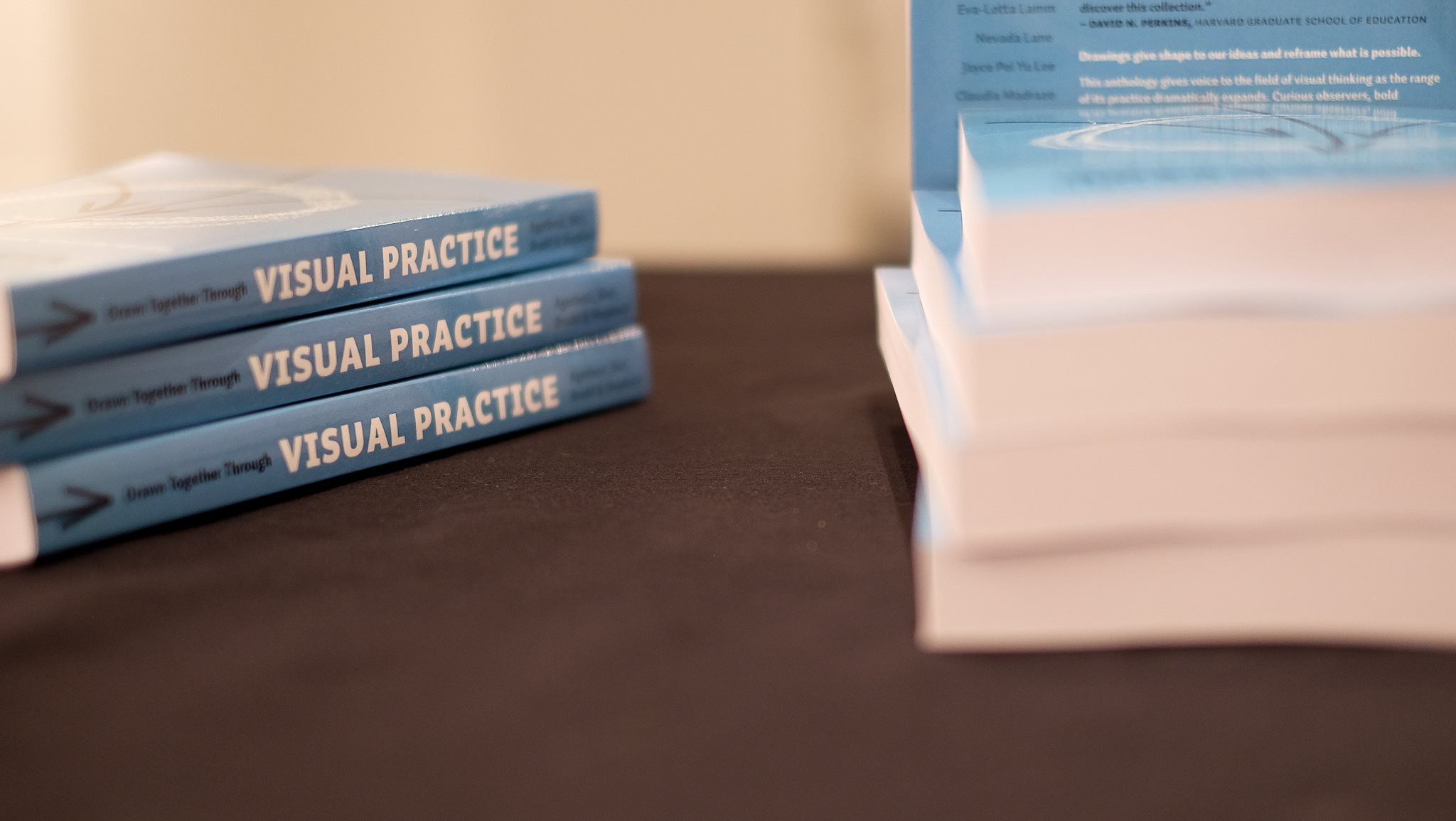
Hello! We’re Jennifer Shepherd and Sam Bradd. We’re visual practitioners, educators and facilitators. This tool, “Drawing Well: 64 big questions for reflection” is an excerpt from our anthology Drawn Together Through Visual Practice.
Download this reflection resource as a free chapter as a PDF here.
PDF Download: Question Well, from our book Drawn Together Through Visual Practice
There are many dynamics and relationships that are worthy of reflection during visual facilitation. We have crafted 64 questions to support your reflection. We’ve organize them in 9 areas of focus to help you navigate your way through the Question Well.
We offer these methods as wisdom from our shared experience as a gift to the visual practice field. We’ve tried them all, and they work! These are only a start. Now, it’s your turn.

My relationship with the field of visual practice, our role, and our work to do
- 1. What is my wish for the field of visual practice?
- 2. What do others in the field seem to care about right now, and what about that matters to me?
- 3. What am I doing to learn with others, if anything? (For example: meet for coffee dates, participate in graphic jams, attend conferences…)
- 4. What might I share with others to help the field learn and grow?
- 5. What trends do I notice in the visual practice field right now? What is unfolding?
- 6. What do I need to pay attention to as the field changes?
- 7. What helps me distinguish what work is mine to take on and what work might be better suited for another practitioner?
- 8. If we brought a common message to our clients as visual practitioners, what would we say about who we are, what we do, and how we act?
My self and my visual practice
- What is the scope of my visual practice?
- 10. What ethics guide my visual practice?
- 11. What are my primary talents?
- 12. What skills do I need or wish to acquire?
- 13. When I’m caught by surprise, by something that is said or happens in the room, how do I refocus?
- 14. When I am working with emotional content, how do I take care of myself?
- 15. What qualities do I need to have as a competent visual practitioner?
- 16. What’s one value that I bring to my work? What are some of my other core values?
- 17. What can I learn from accessing vulnerability and humility? How do I bring these into the room and to the group?
- 18. If I’m working in an unfamiliar context, what resources can I turn to? For example, I might not know the relevant words or images. What do I need to learn or ask before I arrive in the room so I feel prepared?
- 19. How can I work to support diverse experiences, across difference, to value and hold all voices and perspectives in the room?
My relationship with the client
- What do I need to share with my clients about the potential of visual language and practices?
- 21. What practices can I share to help clients adopt visual thinking?
- 22. How can I help clients reflect on the impact I can make?
- 23. What do my clients need to know about me and my unique capacities?
- 24. What do my clients need to tell me about their projects for me to do my best work?
- 25. What enables visual thinking practices to flourish in an organization?
My relationship with the artifact I am creating
- How do I hold the client’s intent and meeting outcomes in mind while I’m working?
- 27. How do I respond when someone asks me to change a drawing?
- 28. How do I nourish my creativity?
- 29. How do I develop my personal visual vocabulary to keep it fresh and relevant?
- 30. What do my visual icons say about my worldview and my appreciation of context?
- 31. What technology and platforms do I use for my work, and why?
- 32. What helps me choose the emotions, words, and unspoken dimensions (or “elephants in the room”) to capture?
- 33. How can the room setup help me do my best work?
- 34. When does it matter to accurately represent an idea visually?
My relationship with participants
- What do I need to know about myself to be in service to the group?
- 36. What do I need to know—and care—about the group to be in service to myself?
- 37. What matters about how I am introduced? What do I need to tell someone who is introducing me?
- 38. What feedback can I ask participants for that can help me reflect, learn, and grow?
- 39. If I can’t just show up, set up, and get to work, then what is needed to connect with participants and the environment?
- 40. Can I think of a time when a participant came up to me and described how the visuals changed the experience for them? What did we learn in this conversation?
- 41. How do I tap into group dynamics and choose what belongs on the page?
- 42. What is my role in orienting participants to the power and potential of visual thinking methods?
- 43. How can I help participants use the visuals to reflect?
- 44. What emotional impact could our work have for participants? What could thinking about this bring?
My relationship with the facilitator(s)
- What conversations do I want to have with the facilitator before a session begins?
- 46. Knowing sessions vary, what helps me stay nimble and respond in the moment?
- 47. What do I need to know about facilitation to help me be a good partner?
Participants’ relationship with the artifact
- 48. How could the room setup influence participants’ ability to reflect and make sense of their work?
- 49. Do participants see the artifact as “something I’ve done for them,” or as “something I’ve done with them?” Does it change how I do my work?
- 50. What helps participants feel connected to the artifact and offer input or feedback to the creation? What can happen before, during, and after?
- 51. What do participants do as they look at the artifacts?
- 52. What activities could I suggest to use the visual artifacts to help participants reflect?
- 53. What helps participants make “Big Picture”connections?
- 54. How can I measure what matters?
- 55. How can I help participants see things they couldn’t see before, and how can they show me things I couldn’t see before?
- 56. What activities could help participants reflect on their own drawings?
The client’s relationship with the artifact
- 57. What is the specific purpose of the visual artifact to be created? Who is it supposed to help, with what, and how?
- 58. How will this artifact have use after the meeting?
- 59. How could the artifacts be used for reflection after the meeting?
- 60. Have you been in a session where the process of creating the artifact was of greater value than the artifact itself? What is different about these times?
Our work and the future
- 61. How might our work be relevant to people outside the room?
- 62. How do our drawings influence culture?
- 63. If visual practices were integrated into every profession, what would that look like?
- 64. How does visual practice shape a future? What becomes possible?
PDF Download: Question Well, from our book Drawn Together Through Visual Practice
Read more in Drawn Together Through Visual Practice.
This Question Well tool is part of our anthology, Drawn Together Through Visual Practice edited by Brandy Agerbeck, Kelvy Bird, Sam Bradd and Jennifer Shepherd. This anthology demonstrates the power of visuals as a sensemaking device in an age of unprecedented complexity.