
Illustrating a Sea Garden for the Pauquachin First Nation
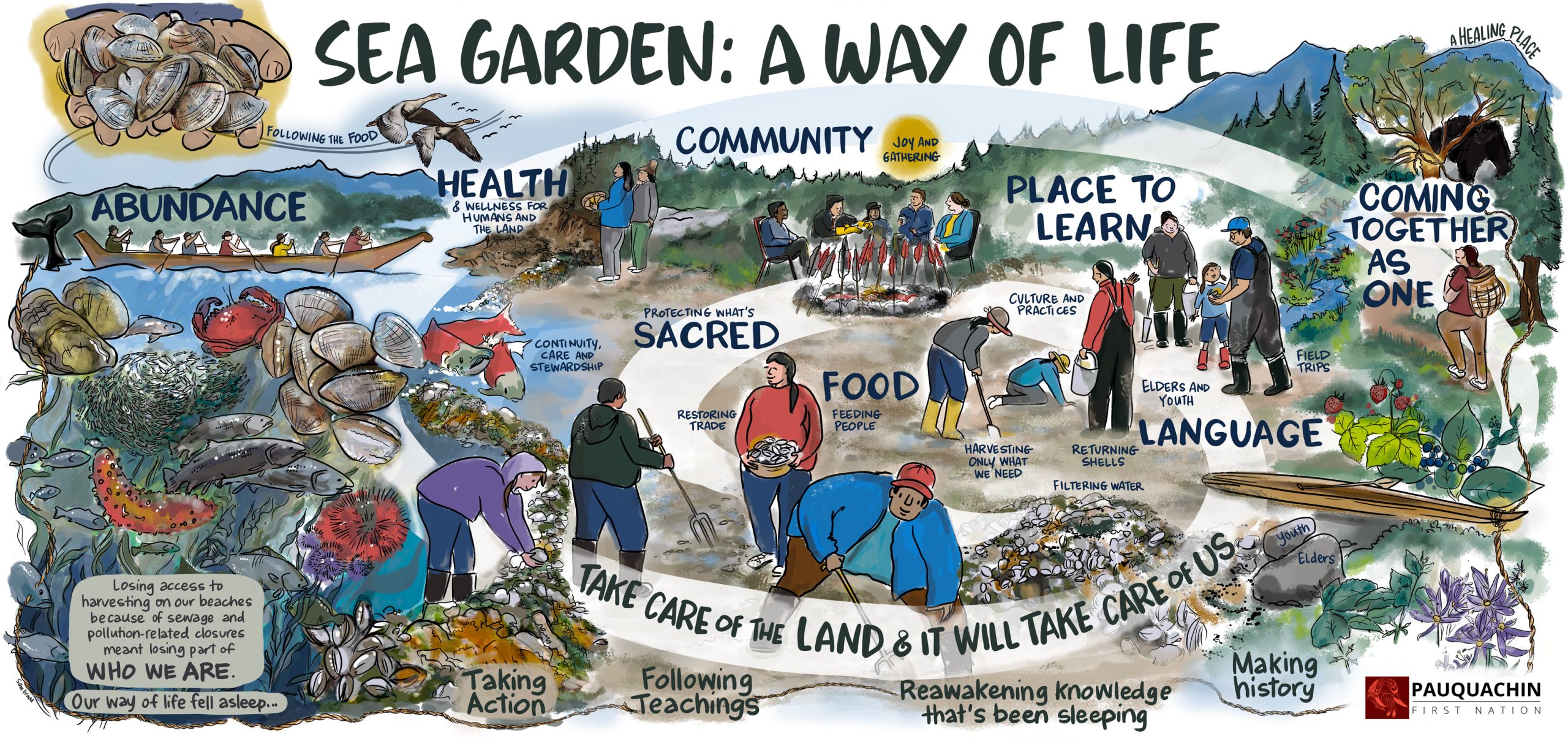
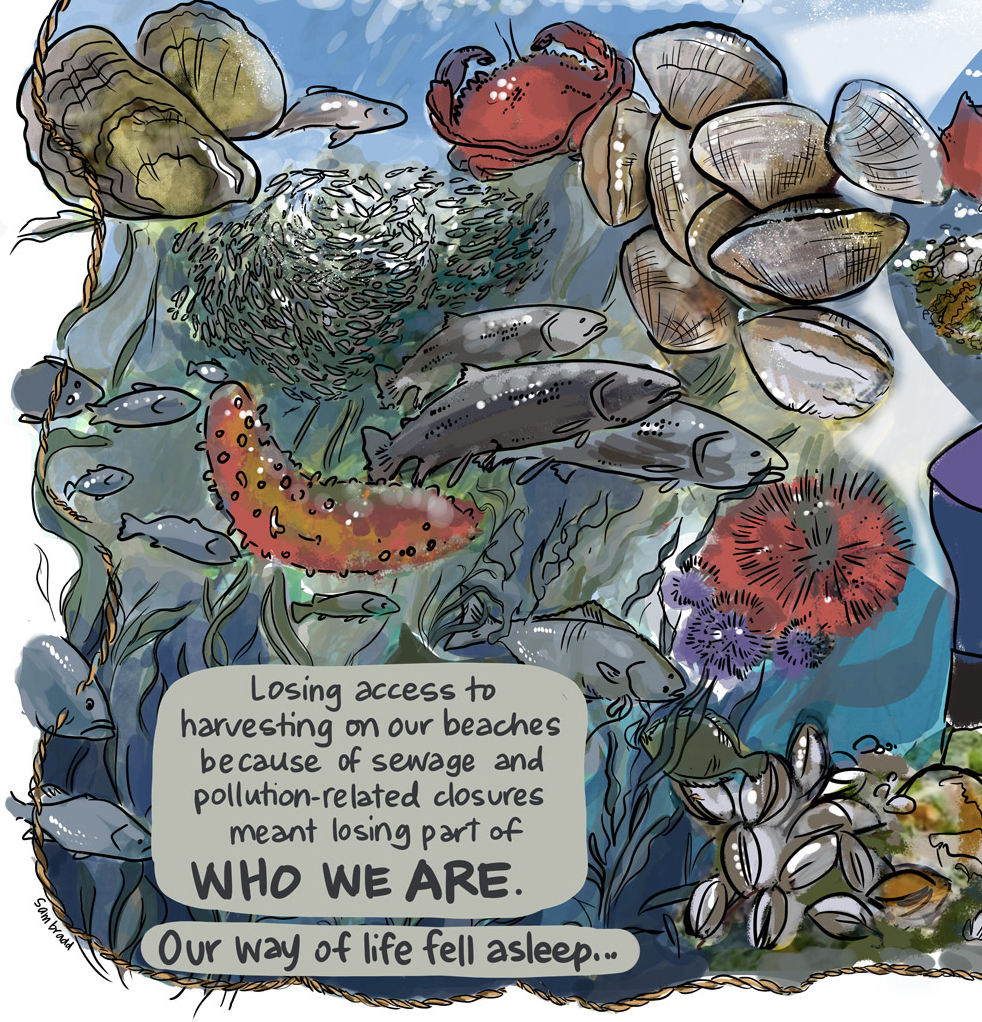
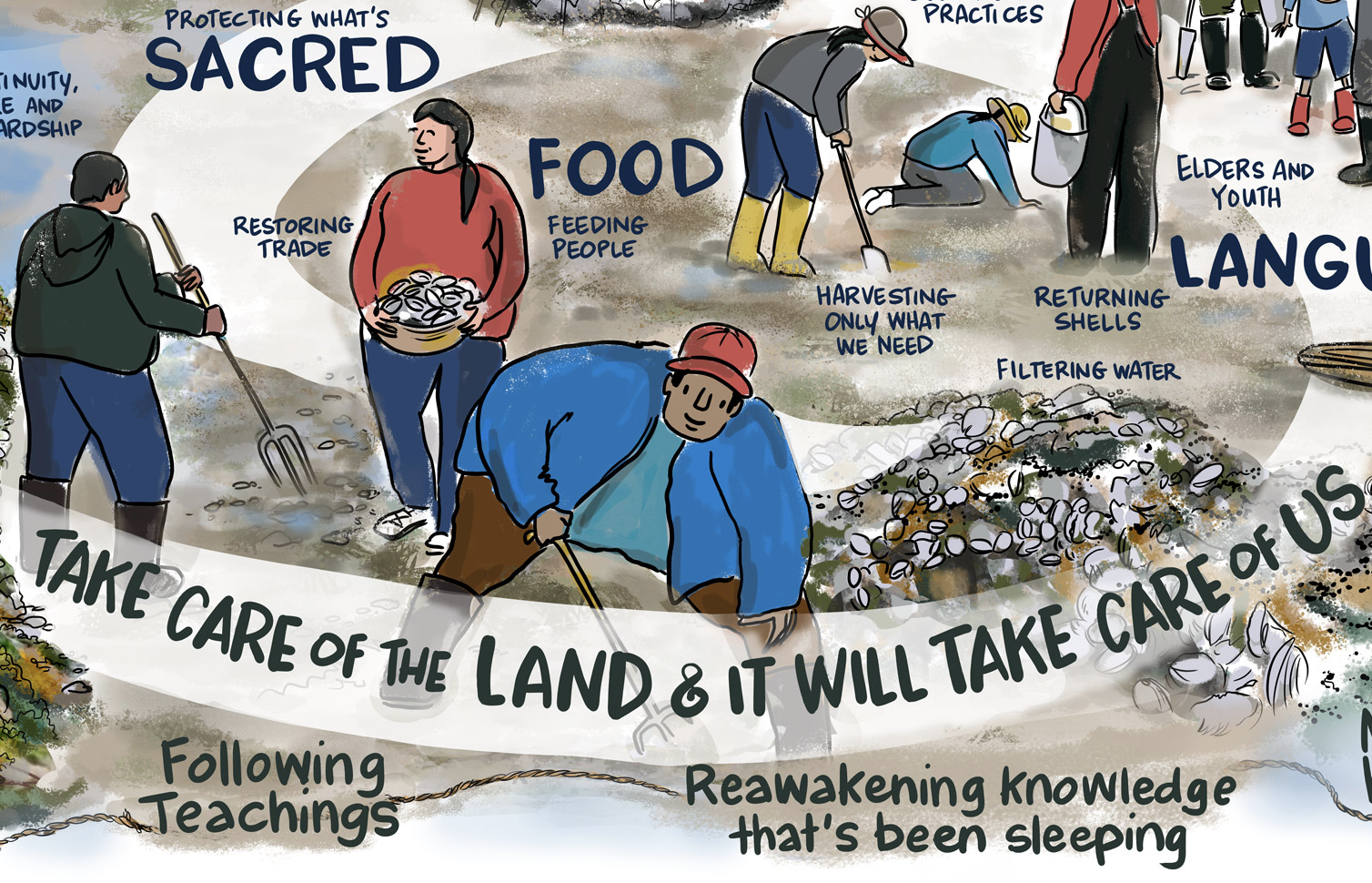
Pauquachin First Nation is reclaiming Coles Bay through the creation of a traditional Sea Garden. For over 25 years, the Bay has been closed to shellfish harvesting due to pollution, disrupting Pauquachin First Nation’s food systems and cultural practices. But this Sea Garden brings hope: a Sea Garden supports cultural revitalization and ecological health of the Bay. It nurtures clam beds, welcomes the return of sea life, provides food sustainability, and awakens sleeping traditional teachings and harvesting practices for future generations.
Invitation to Coles Bay and graphic recording
To share the story of the Sea Garden, Pauquachin’s Marine Department invited me to visit their territory and co-create an illustrated poster. We chose graphic recording as our methodology, an approach that uses visual storytelling and deep listening. It’s not just about drawing, it’s about creating space for art-making, dialogue and honouring Indigenous ways of knowing. As a graphic recorder of Italian and Scottish heritage, being present on the land was important to respect the Nation’s invitation and partnership. This work requires striving for cultural humility, active listening, and connection, which isn’t the same from a distance.
Behind the scenes: artistic process
The project began with a visit to Coles Bay, where I saw the Bay and learned about the challenges firsthand. Back inside the offices, I hung up large graphic recording paper on a wall and began drawing as the Marine Department team described the interconnectedness of cultural and ecological wellness for them. I kept sketching and adjusting, and then a breakthrough moment came when we realized the before/after layout would be better as a spiral, to emphasize a holistic way of life. I quickly redrew the concept using the spiral, then the team added meaningful details that painted an abundant future, like intergenerational clam harvesting and more species returning to the intertidal area. With a solid draft in place (and promises to improve my drawing of geese!), I returned to my studio to complete the full-colour version of the poster.
Pauquachin S’uylu Skweyul (Spirit Days)In August 2025, Pauquachin hosted Spirit Days, a three-day Sea Garden Restoration Gathering. People came together to build a 250-meter traditional rock wall by hand during low tides. These carefully placed “seed rocks” support clam beds and marine life. The event included ceremonies, site visits, and shared knowledge from Indigenous leaders from many countries. As rock walls were built, so were connections between people, ecosystems, and Indigenous knowledge systems.